
 What does it take to turn a restaurant into a household name – not just for a season, but for nearly two decades?
For Scopri in Melbourne, the answer involves a working farm in the hills, a 30-year kitchen veteran, a culture that money can't manufacture and a quiet but powerful force that only reveals itself in a crisis: goodwill.
In the latest episode of Behind the Business, we sat down with Scopri's owners Anthony and Alison, their executive chef Alexis, and the team that has kept the place humming for the better part of 17 years.
What we found was a business model built less around spreadsheets and more around something harder to quantify – and far harder to replicate.
Here are 8 key lessons from the episode:
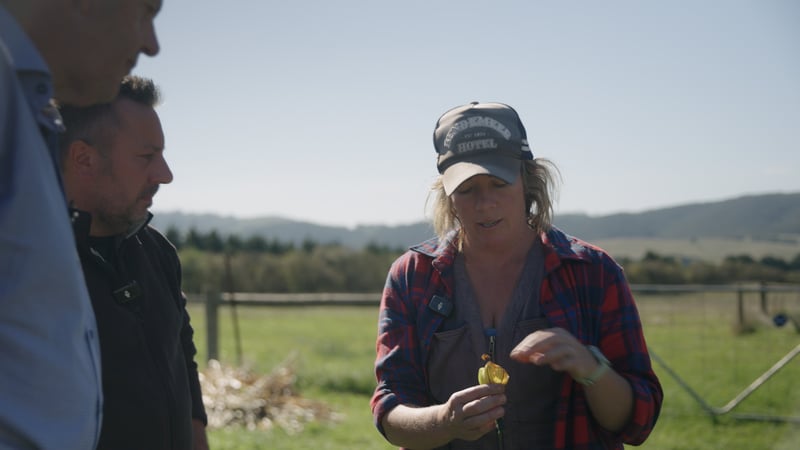
1. The farm is the foundation. What started as backyard lettuce became ‘Romsey Ranges’ – a working farm 90 minutes from Melbourne. It can't be easily valued, but it delivers taste, freshness, story and a point of difference no competitor can quickly replicate.
2. Neither owner is a chef – and that's deliberate. The brand has never been built around a celebrity chef. It's built around experience – which, as Marco Pierre White told Anthony, accounts for 75% of dining. The kitchen is only 25%.
3. Consistency is the hardest thing to deliver – and their biggest asset. Customers come back because they know what they're going to get. That predictability is what makes them confident in recommending Scopri to others.
4. Culture is literal, not corporate. Maria has been in the kitchen for 30 years. Some waitstaff have been there 15. You can't manufacture that culture; you have to earn it over years.
5. Generosity compounds. Free limoncello, remembering names, and past stories and happenings with customers, going the extra mile – it started as instinct and became a business model.
6. Covid proved the goodwill was real. Their finish-at-home meal boxes sold not just to regulars, but to regulars buying for friends and family who'd never even been to Scopri. Ten years of goodwill paid back under pressure.
7. Bar Olo was smart diversification, not just expansion. Opening a wine bar down the street kept waiting guests in-house, renewed the team's energy and attracted a younger demographic now trickling back into Scopri and diversifying its customer base.
8. Goodwill is a real asset – just hard to value conventionally. The customer base is multigenerational, growing and diverse. The supply chain has integrity. The team carries irreplaceable institutional knowledge.
It started in a backyard
When Anthony and Alison first opened the restaurant almost 17 years ago, they'd turned their Melbourne backyard into a small kitchen garden – mostly for themselves. Because they were at the restaurant virtually every waking hour, the produce went largely untouched. So they started bringing it in.
"The chef at the time said, ‘Your lettuce is just so much better than any lettuce we can buy from the wholesalers’,” Alison recalls. “And that's how it started, really.”
That beginning has since grown into ‘Romsey Ranges’, a working farm about 90 minutes from Melbourne where Anthony and Alison now live and raise their children. A single row of San Marzano tomatoes – 42 plants – produces about 100 litres of sauce annually. The restaurant uses considerably more. But volume isn't the point. The farm delivers story, quality and the kind of difference you can taste when ingredients are grown by the people who care most about what ends up on the table.
Is it a passion project or a commercial venture? Alison laughs: "There's a big pit over there. That's the money pit." But Anthony is clear about its strategic value: "We can't put a value on it. But what it's done – it's made the restaurant unique. It's turned it into an institution."
The farm presents real operational challenges. Chefs order in small quantities, daily. A farm produces seasonally, in bulk, sometimes in glut. Aligning the two rhythms took time and compromise on both sides. "It's a bit of meeting each other halfway, really," Alison says.
That complexity is also a moat – a competitor can't simply decide to replicate this model overnight.
‘Neither of us are chefs’ – and that's the point
Both Anthony and Alison are front-of-house. There is no celebrity chef over the door, no big name anchoring the brand.
"We've never really marketed ourselves on a big name chef like some places do," Alison explains. "Consistency is the one thing we've managed to sustain. They keep coming back because they know it's going to be the same – and that's why they can confidently recommend to their friends, and their friends."
The philosophy behind this came partly from a visit Anthony made to see Marco Pierre White. White's message: the kitchen accounts for just 25% of the dining experience. The other 75% is service, ambience, remembering names, recalling a previous conversation, making guests feel genuinely welcomed.
"We're actually selling that experience," Anthony says.
Executive chef Alexis has absorbed this entirely. "They've got people who've been working here for 15 years. Some of these waiters and waitresses are just incredible. Everyone comes in – Bruce at the door, Anthony walking around chatting to tables. Consistency and culture. Through the service and food."
Maria, 30 years in
To understand the culture at Scopri, walk through the kitchen.
It's a small engine room – Anthony's words – with a lot of cylinders firing. Maria has been one of them for 30 years. "She came with the building," Anthony says, only half-joking.
Another team member describes it simply: "It's like a family environment. We've been together for a long time." Maria: "Number one family. Help each other, respect each other. We love the job. We love Anthony – but Alison is number one."
This is culture not as a value on a wall, but as something lived and renewed every single shift. Long-tenured staff carry institutional knowledge about standards, about regulars, about the way things are done. That knowledge can't be hired in from outside – it can only be built over time. And the economics follow: high retention reduces recruitment costs, raises service quality and drives the repeat visits that lower customer acquisition costs over the long run.
Generosity as a business model
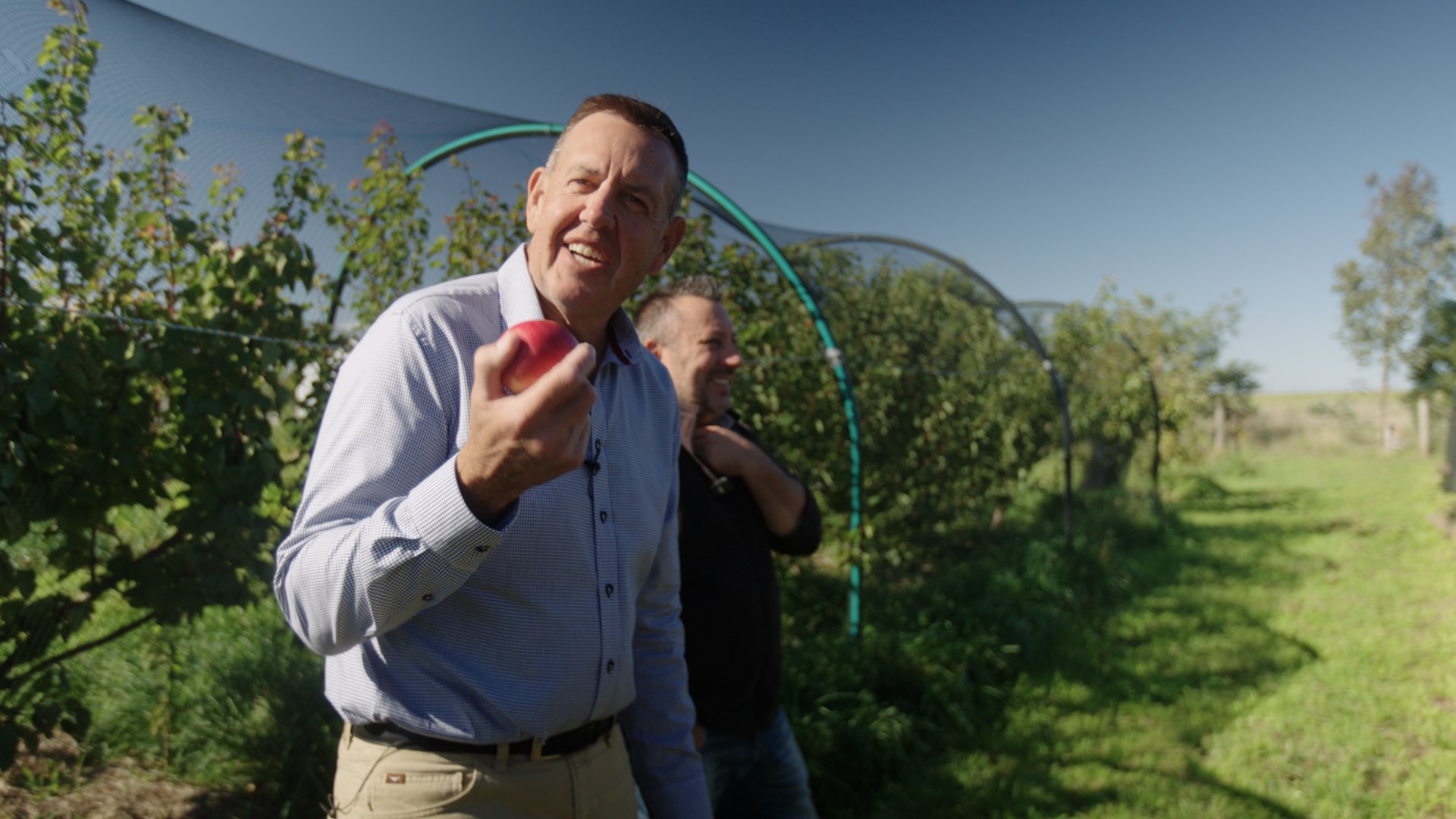
"The answer is probably that they're the most generous operators," says Alexis, when asked how the business actually works.
Alison elaborates: "We're a family business. We're not reporting to investors. We started from nothing, working all day every day together, giving people free limoncello at the end. Just topping up, topping up. That generosity right from the beginning – that's how we gained the repeat customers."
She pauses. "I remember nights out the back polishing glasses at 2 in the morning going, 'What are we doing?'"
To be clear, Scopri is not a charity. "We still need to make money," Alison notes. But the model is built around the understanding that generosity compounds – the customer you look after tonight is the one who recommends you to five friends next week and brings their children in years from now.
As Anthony puts it: "People tend to go to places they trust, and hence why a restaurant like this will continue to be busy, even if there are challenges out there."
Covid, goodwill and the moment everything made sense
The real test of a brand comes under pressure. For Scopri, that was COVID-19.
With the dining room closed, Anthony and Alison pivoted to finish-at-home subscription meal boxes. The response validated everything they'd built.
"I had clients ringing up saying, 'We'll get you through Covid. I'll take a box for my staff, a box for my daughter who's never been to Scopri, a box for my granddaughter in Macedon,'" Anthony recalls. "So it wasn't so much my regulars buying – but them buying for others. The brand just grew and grew and grew."
This is when accumulated goodwill converts into measurable value. A decade of relationship-building paid back under pressure – through customer acquisition at zero cost, driven entirely by advocacy.
"You hear about goodwill, but you don't realise until that moment what you've done for the past ten years is paying off now," Anthony says. "We realised: we're going to get through Covid, no problem."
Goodwill is not a soft metric. It's a reserve – accumulating in good times and drawing down in hard ones. The longer the accumulation period, the more powerful the effect.
Bar Olo: Diversifying the base
In 2024, Anthony and Alison opened Bar Olo – a wine bar just down the street. The decision was strategic on several levels.
Practically, it kept waiting guests within their own ecosystem rather than sending them to a competitor across the road. It gave the team renewed creative energy after 17 years in the same venue. And it proved the Scopri brand had genuine platform value – press coverage of Bar Olo consistently referenced the restaurant, generating visibility at no additional cost.
Most importantly, it diversified the customer base. Bar Olo attracted a younger demographic, and a significant proportion have since converted to Scopri diners. Any business with a concentrated customer base carries risk however loyal that base may be. Broader demographic reach creates resilience. Alison's framing is direct: "We've got ten baskets, not just one."
Children of long-term Scopri regulars are now coming as adults with their own friends. The institution is passing through the generations.
What is it worth?
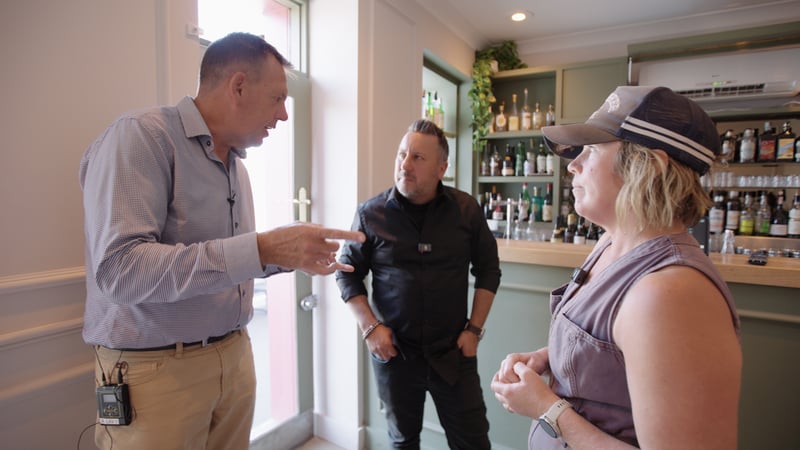
Anthony thinks seriously about brand value. "We need to make choices on what we do to add value to our brand," he says. "It's not just the restaurant and the bar and the farm. It's also now becoming a real estate player."
Valuing Scopri conventionally – hard assets, a standard multiple – misses most of what makes it valuable. The real value sits in the customer portfolio: its repeatability, its generational depth, its growing diversity. In the supply chain: owning the farm delivers a point of difference in taste, freshness and story that city competitors can't easily replicate. In the team: staff at 10, 15, 30 years carry institutional knowledge that can't be recruited.
None of it sits neatly on a balance sheet. Anthony and Alison built the farm as their home, not with a sale in mind. But the value is real – it just has to be captured deliberately. That means documenting what's transferable, building systems that don't depend solely on the owners and giving the process time.
The worst exit plan is the one you want in six months. Five years is the realistic minimum.
A final thought
Consistency, culture and a genuine point of difference – these three things, applied over 17 years, have produced the most durable competitive advantage a business can have: goodwill. And goodwill, once it reaches scale, becomes something that neither a downturn nor a pandemic can easily undo.
That's what it means to be an institution. And Scopri has earned it.
For the full Scopri Behind the Business experience, please watch us on YouTube.