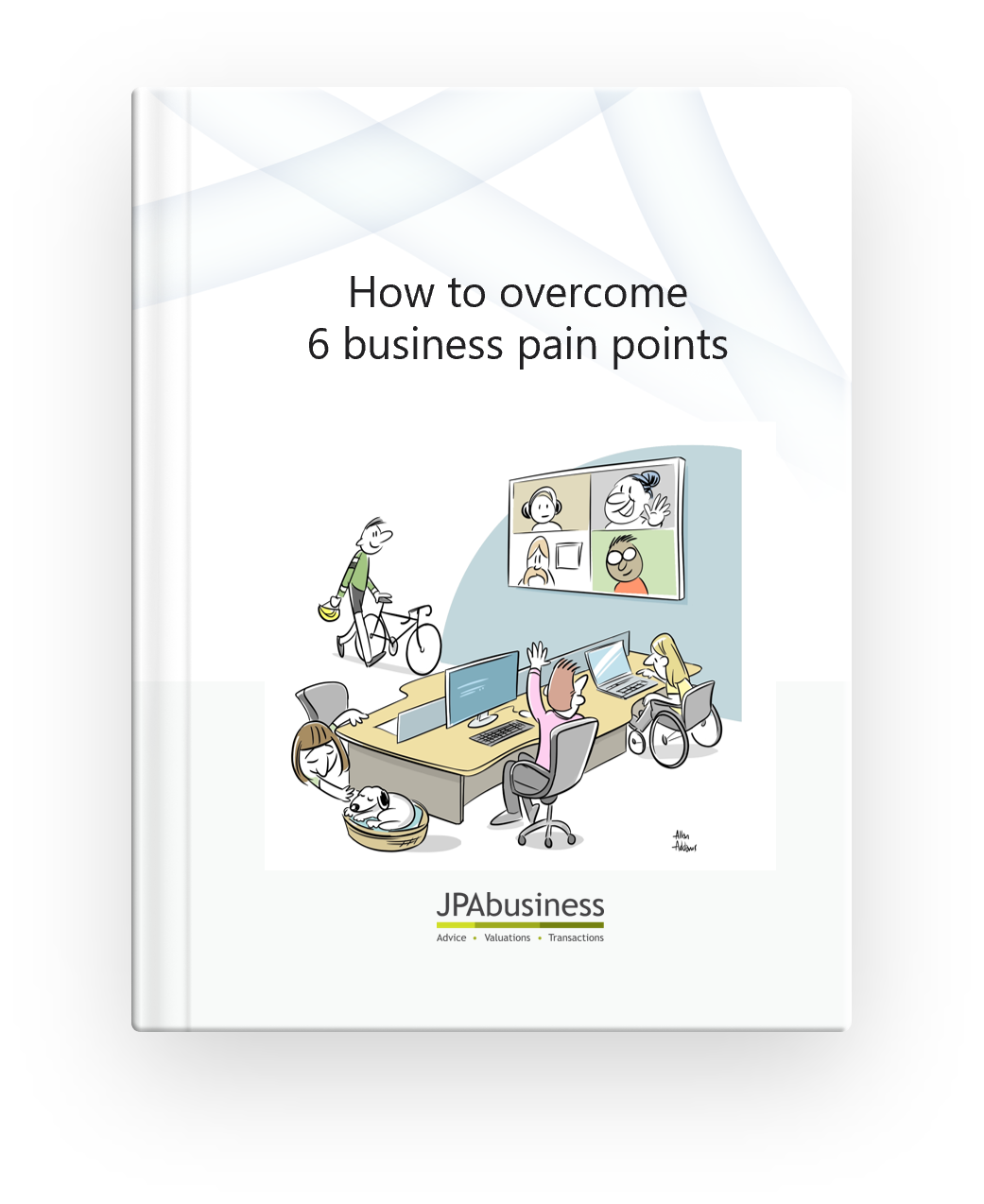
As a business owner, sometimes you can feel overwhelmed as you deal with competing priorities, including the day-to-day running of the business, external issues you can’t control and particular business ‘pain points’ that arise.
In our ebook, How to overcome 6 business pain points, we highlighted 6 major ‘pain points’ that we’ve seen crop up at different times across many businesses, depending on where they are in their business journey, and offered some remedies.
The common pain points are:
- Always working ‘in’ the business, instead of ‘on’ the business
- Building a strong team
- Managing growth
- Being tied to the business
- Work–life balance
- Cash flow.
Building a strong team
In Chapter 2 we looked at the challenge of building and retaining a strong team.
Australia's labour market remains very tight – strong people capability is a rare resource that is creating all sorts of constraints and pains for businesses.
There are no silver bullets, but the challenge is not insurmountable, even in today’s difficult labour market.
Actions/remedies/tips:
There is no set formula for building a team, because ultimately every company has a unique set of ‘ingredients’, i.e. people.
But there are some key elements of successful team building:
1. Assess your existing capability
Work with your existing team to develop a shared understanding of where you are in terms of your capability (as individuals and also as a ‘working team’).
It’s important to involve the team in this process as they may well have a different view of their capability than you have as the team leader.
2. Identify and fill gaps
Once you’ve identified capability and skills gaps, determine how to fill them.
If it’s a matter of improving individuals’ capabilities or performance, consider training and professional development, reward and recognition opportunities, and performance management.
If it’s a matter of improving team performance, consider the current team culture and practice. Get the team talking and ascertain their view on the culture and how the team really operates e.g. do they have each other’s backs, do they feel the team is a safe space to own their failures and learn from them, or do they fear they will be persecuted for mistakes?
Changing a team culture is a very deliberate process and it won’t be achieved by simply holding a team barbecue once a year.
3. Align your recruitment processes to ensure they mesh with the team expectations and culture, and the capability requirements.
Overcoming the pain
Inevitably this pain point, along with the other five, go to the heart of business performance and, if not dealt with in a sustainable way, will affect a business’s value and the extent to which it might be transferable, should a business owner wish to exit or go through a succession process.
At the end of each chapter we’ve offered a few actions and remedies, plus links to other resources that we hope will assist business owners to alleviate some of the pain.
If you need support dealing with pain points in your business, we’re keen to help you. Feel free to get in touch for a confidential, obligation-free discussion.