
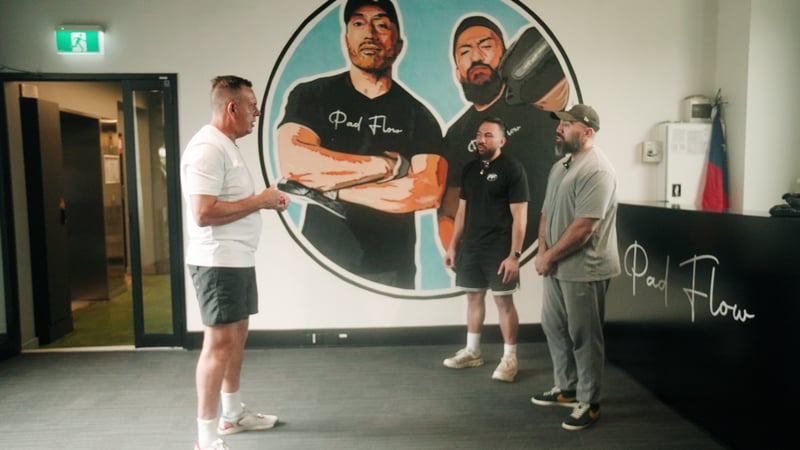
 Communication, craft and community are 3 key pillars underpinning the success of Pad Flow gym co-founders Gideon and Horrace Uelese.
For this week's video the Sydney-based brothers took me ‘behind their business’, sharing insights that are relevant whether you are a gym owner, running a food distribution business, in real estate sales and property rental, or manufacturing customised products for the mining industries.
We’ve summed up 8 themes and learnings from the interview below – whether you have a turnover of $1M or $100M, I encourage you to learn from their experience:
1. Resilience and adaptability
-
Starting from the ground up: Gideon and Horrace started with zero funding, working out of a dog park, and adapting to the changing circumstances, including the COVID-19 pandemic. They embraced the uncertainty and used it as an opportunity to build something from scratch.
-
Learning through trial and error: The journey involved a lot of learning – shifting from one-on-one sessions to managing a gym, adjusting prices, figuring out business models, and refining their approach to member management and marketing.
2. Community and relationship building
-
Building strong client relationships: The gym grew from a personal connection with clients, to creating a community. They emphasise treating clients well, over-delivering on value and making sure people feel welcome.
-
Family values: Both Gideon and Horrace are deeply motivated by their families, feeling a strong sense of responsibility to provide for their parents and now their own families. This drive reflects the core of their business ethos – putting people first.
3. The importance of consistency and work ethic
-
Hard work and persistence: They talk about showing up every day, being consistent with their approach and offering high-value content on social media. Consistency is a core factor in building their following and growing their brand.
-
Investing in personal growth: Gideon mentions working hard to justify the price they were charging by constantly improving himself and the services they offer. Their dedication to improvement is also evident in their willingness to keep learning from mistakes and feedback.
4. Pricing strategy and value proposition
-
Raising prices as a strategy for commitment: They realised that increasing their prices led to a more committed clientele. They made the decision to raise prices to filter out less-serious clients and attract individuals willing to invest in their service.
-
Value over volume: They purposefully limited the number of members (capped at 120) to ensure the quality of service remained high. Their focus is on delivering value, not just filling the gym with more clients.
5. Creating a premium brand
-
Positioning as a high-value offering: They wanted to differentiate themselves from regular gyms by offering something premium and specialised. Their branding and pricing reflect this.
-
Focus on client experience: The idea of creating an environment where clients feel both personally valued and part of a community is central to their gym’s identity. Their mission was to provide an exceptional and personalised experience, something not typically found in a traditional gym setup.
6. Building through social media and word of mouth
-
Leveraging social media: Gideon and Horrace recognised early on that social media could be a powerful tool for growing their brand. They invested in content that demonstrated their expertise and got noticed by potential clients, even globally.
-
Organic growth through community: Word-of-mouth helped them build credibility, especially in the dog park phase. As their social media gained traction, so did their reputation, leading to more clients.
7. Overcoming financial challenges
-
Financial sacrifices: They were living pay check to pay check at one point, sending money back to their families while trying to make the business work. They faced significant financial strain but pushed through by keeping their eyes on the long-term goal.
-
Smart financial decisions: Once they began to see success, they strategically sought financial help and took on the ‘right kind of debt’, which ultimately helped them secure a physical location for the gym.
8. Entrepreneurial growth and knowledge acquisition
-
Learning the business side: While both had a passion for boxing, they had to learn about business management, membership models, sales and marketing. It wasn’t just about boxing; it was about becoming effective business owners.
-
Help and mentorship: They received guidance from a mentor who helped them understand the business aspects – finances, operations and how to scale. This mentorship was a key factor in making the transition from the dog park to a full-fledged gym.
These themes highlight the combination of entrepreneurial grit, strategic pricing, community building and personal sacrifice that has led to the growth and success of Gideon and Horrace’s boxing gym.
It also underscores the importance of staying true to values like family and consistency while adapting to challenges.
This summary is just the tip of the iceberg – the guys and I covered a number of other business issues, including owner concentration risk, its potential impact on their business value, and how they plan to overcome it.
Enjoy the full video on YouTube and please feel free to share with your network.
.jpg?width=400&height=225&name=BTB01-Thumb02%20(1).jpg)